
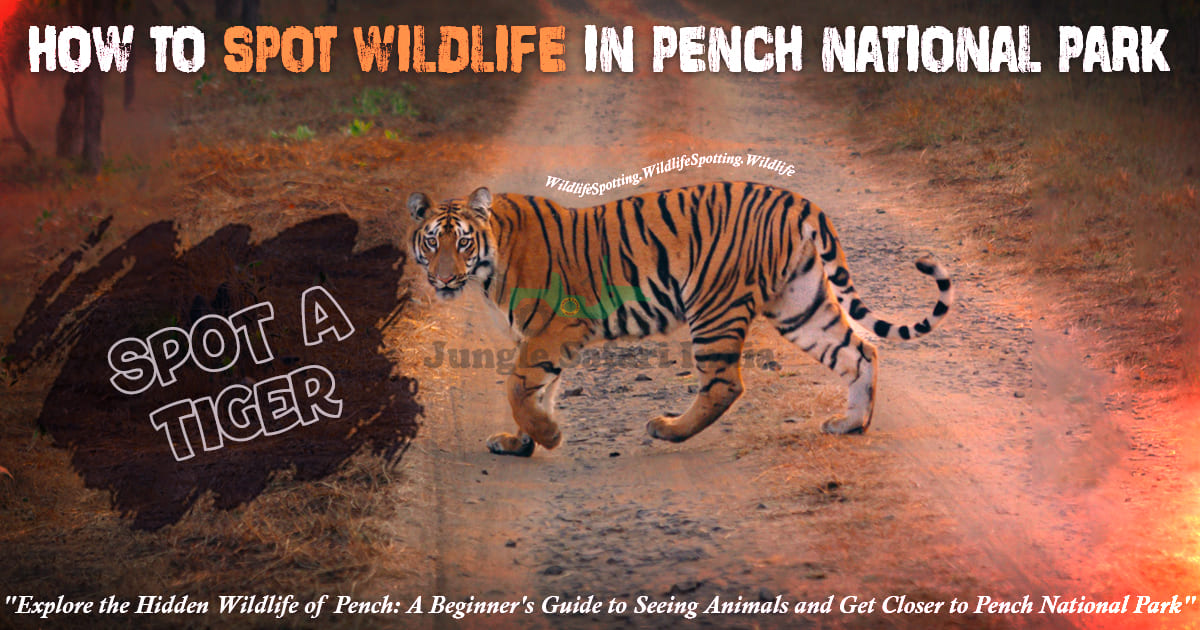
How To Spot Wildlife In Pench National Park
Do you know that Pench National Park is part of the Project Tiger program of India? This national park...
Read More
This Website is Owned by Jungle Safari India, We are private travel agency, Visitors Can Book Pench National Park Safaris, Hotels, Tour Packages.

When most people plan a safari at Pench National Park, they usually think only about the core zone. Everyone believes the core is the best area inside Pench, and all action happens only inside the core zone of the Pench National Park. But the truth is something different. The buffer zones of Pench are just as exciting as the core zones, and sometimes they even feel more natural, peaceful, and full of surprises.
Let’s know how the buffer zones of Pench are as exciting as the core zones and why you should never ignore them while making a Pench Safari Booking.
To know the charm of buffer zones, you should first know the meaning of buffer zones. The buffer zone is the outer area of the core zones of the park. The core zones are the main protected areas of the forest where animals live with very little human interference. On the other hand, the buffer zones surround the core zones, and they act as a protective shield around the core zone.
In simple words, the core zone is the centre of the forest, and the buffer zone is the outer layer of the forest. Animals move freely between both zones as they don’t know them. They only know the park as their natural home and stay there normally.
In Pench, the buffer zones are divided between two states. Some buffer zones are in the Madhya Pradesh state, and some are in Maharashtra. Some of the famous buffer zones for safari are the Touria Buffer, Khursapar Buffer, Sillari Buffer, Wolf Sanctuary (Deolapar region), Rukhad, and Kumbhpani Buffer zone. Each zone is unique and offers sightings of different animal species.
The buffer zones of the Pench National Park are as exciting as the core zones, and they offer wildlife sightings, green forest areas, and raw natural beauty to explore. Many travelers even believe that the Pench safari in the buffer zone is better than the safari in the core zone because it offers exploration inside the park without getting disturbed by the crowd.
Pench National Park is a natural home for animals, and they don’t know where the “core zone” ends and the “buffer” begins. The movement of tigers inside the park depends on the availability of the prey species. Many famous tigers of Pench, like Collarwali, Rayyakasa male, and the Patdev female, have used the buffer area of the park as their territory. Tigers and leopards roam across both zones and can be spotted in any one.
Wild dogs (dhole) are often seen in the buffer zones of the park running in groups inside the buffer area. And, sloth bears are seen in the buffer zone searching for termites and fruits. Furthermore, deer, sambar, langurs, and wild boars stay in the buffer most of the time because there is plenty of grassland area there, which offers them food.
Many famous Pench tigers, like Collarwali, Rayyakasa male, and the Patdev female, have historically used buffer areas as part of their territories. This shows that tigers can be seen in the buffer zones of Pench too. Sometimes, the sightings of tigers are even better in the buffer area than in the core zones because the forest area on the outer side is more open, and animals are easier to see.
One of the biggest reasons why people make a Pench Safari Booking for the buffer zone is that it offers peace. The core zones of the park usually remain filled with the gypsies lining up during the safaris. Everyone wants to enter the park at the same time and enjoy the animal sightings in the core zone, but it feels chaotic. Because of the large crowd, people become uneasy and don’t get the chance to enjoy a peaceful time.
But in the buffer zone of Pench, people can enjoy a peaceful safari time without much crowd. The safari starts smoothly, the entry is easier, and you get more time to enjoy the forest without noise and honking. Because of fewer vehicles, the animals also feel relaxed, and they behave naturally. They walk naturally, sleep peacefully, and might even move closer to the safari without fear. This calm environment gives you chances to enjoy better animal sightings and a peaceful time inside the park.
If you make a Pench safari booking for a buffer zone, then you might get a chance to see a larger number of animals during the safari. Buffer zones of the Pench National Park offer people an amazing chance to see the herbivore animals roaming freely in their natural habitat. Inside the park, you can spot animals like spotted deer, nilgai, gaur, sambar, wild boar, sloth bears, and others.
Because of these prey animals, many predators like dholes, tigers, leopards, etc, are seen in the buffer area as they come here in search of food. This all makes the park exploration exciting for tourists as they might even get a chance to see a tiger chasing deer in the buffer zone and hunting it - it will truly be a rare sight.
The buffer zones of Pench National Park are very beautiful. They are full of mixed forests and open areas, which allow the people to see the amazing raw beauty of the Jungle. The buffer areas also have small water bodies, and the villages on their edges, which adds to their beauty. These open landscapes also allow the travelers to see animals even from a distance clearly.
In many core areas of the park, the forest is thick and dense. Animals can be near your safaris, but you cannot see them because of the heavy bushes. Whereas in the buffer areas, you can often spot animals walking from far away. If you go for a safari in the Maharashtra side of Pench National Park, then do make a booking for Tadoba Safari. Add this to your itinerary for experiencing a holiday full of wildlife thrills.
Do you know that Pench National Park is part of the Project Tiger program of India? This national park...
Read More
Are you thinking about visiting Pench National Park in India? This park is very famous for its wild...
Read More
A new wildlife project has started in Maharashtra. In this project, eight tigers are being moved from Tadoba-Andhari...
Read More
(0) Comments: